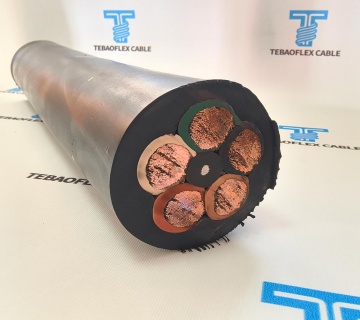
Mining trailing cable is one of the most widely used flexible mining power cables in the mining industry and is primarily used to supply power to mobile mining equipment. It typically features EPR (Ethylene Propylene Rubber) insulation and a CPE/PCP/NBR jacket, giving it a service life far longer than that of ordinary rubber-sheathed cables.
Main Applications for Mining Equipment
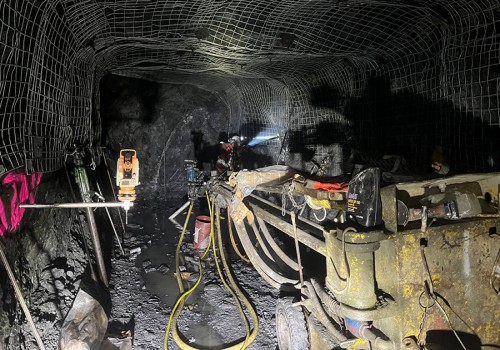
Mining trailing cables are specifically designed to supply power and control signals to mobile mining equipment operating in harsh underground and surface mining environments. These cables are repeatedly dragged across rough mine floors, exposed to abrasion, impact, moisture, oil, chemicals, and continuous flexing.
1. Continuous Miners
A Continuous Miner cuts coal or soft rock from the mining face using a rotating cutting drum. As the machine advances deeper into the mine, the cable continuously follows behind. During the process, the cable experiences constant dragging, repeated bending, sharp turns, crushing from equipment, and wet and muddy conditions. Thus, the cable requires high flexibility, flame retardant, excellent abrasion resistance, reinforced tensile strength, and a heavy-duty rubber jacket. The typical voltages are 1000V, 2000V, 3300V, or 6600V.
2. Shuttle Cars
Shuttle cars transport coal from the continuous miner to the feeder breaker. The shuttle car travels continuously between the Continuous Miner and the Feeder Breaker. The cable is constantly dragged, twisted, coiled, and run over by equipment. Because shuttle cars change direction frequently, the trailing cable must provide excellent torsion resistance, high flex life, impact resistance, and oil resistance.
3. Feeder Breaker
The feeder breaker receives raw coal and crushes oversized material before conveying it. Although the feeder breaker itself is stationary, many operations use movable feeder breakers during panel advancement. Trailing cables provide power while allowing equipment relocation without disconnecting permanent power systems.
4. Mobile Crusher
Large open-pit mines commonly use mobile crushers. The crusher moves with the mining operation. Trailing cables are dragged hundreds of meters behind the equipment. Thus, the cable requires properties such as heavy-duty rubber sheath, UV resistance, abrasion resistance, and high mechanical strength.
5. Roadheader
Roadheaders excavate tunnels in underground mines. During excavation, the machine advances slowly. The cable constantly follows and rubs against tunnel walls. The cable requires continuous flexing, tear resistance, and fire resistance.
6. Longwall Shearer
Longwall shearers travel back and forth along the coal face. Trailing cables move repeatedly with every cutting cycle. This is one of the most demanding applications because the cable experiences thousands of bending cycles, high tension, coal dust, water spray, and mechanical impact. Typical cable standards: Type W, G-GC, SHD-GC, IEC Mining Cables.
7. Roof Bolter
Roof bolters install rock bolts to stabilize mine roofs. Since the equipment moves frequently within underground roadways, trailing cables provide flexible power connections. The cable requires flexibility at low temperatures, crush resistance, and flame-retardant properties.
8. Mobile Conveyor System
Some conveyor systems are movable during mine expansion. Trailing cables enable continuous power supply while the conveyor is repositioned.
9. Excavator / Electric Rope Shovel
Large electric mining shovels use high-voltage trailing cables.
Cable characteristics:
- 5kV–25kV
- Large conductor sizes
- Excellent tensile strength
- High resistance to abrasion
These cables are often managed by cable handling systems to reduce excessive mechanical stress.
10. Surface Mining Drill Rig
Electric blast-hole drill rigs require trailing cables while moving between drilling locations. Typical conditions include long cable lengths, rough rock surfaces, exposure to sunlight, and water and mud.
The cable requires UV-resistant, weather-resistant, high-flexibility, and cut-resistant properties.